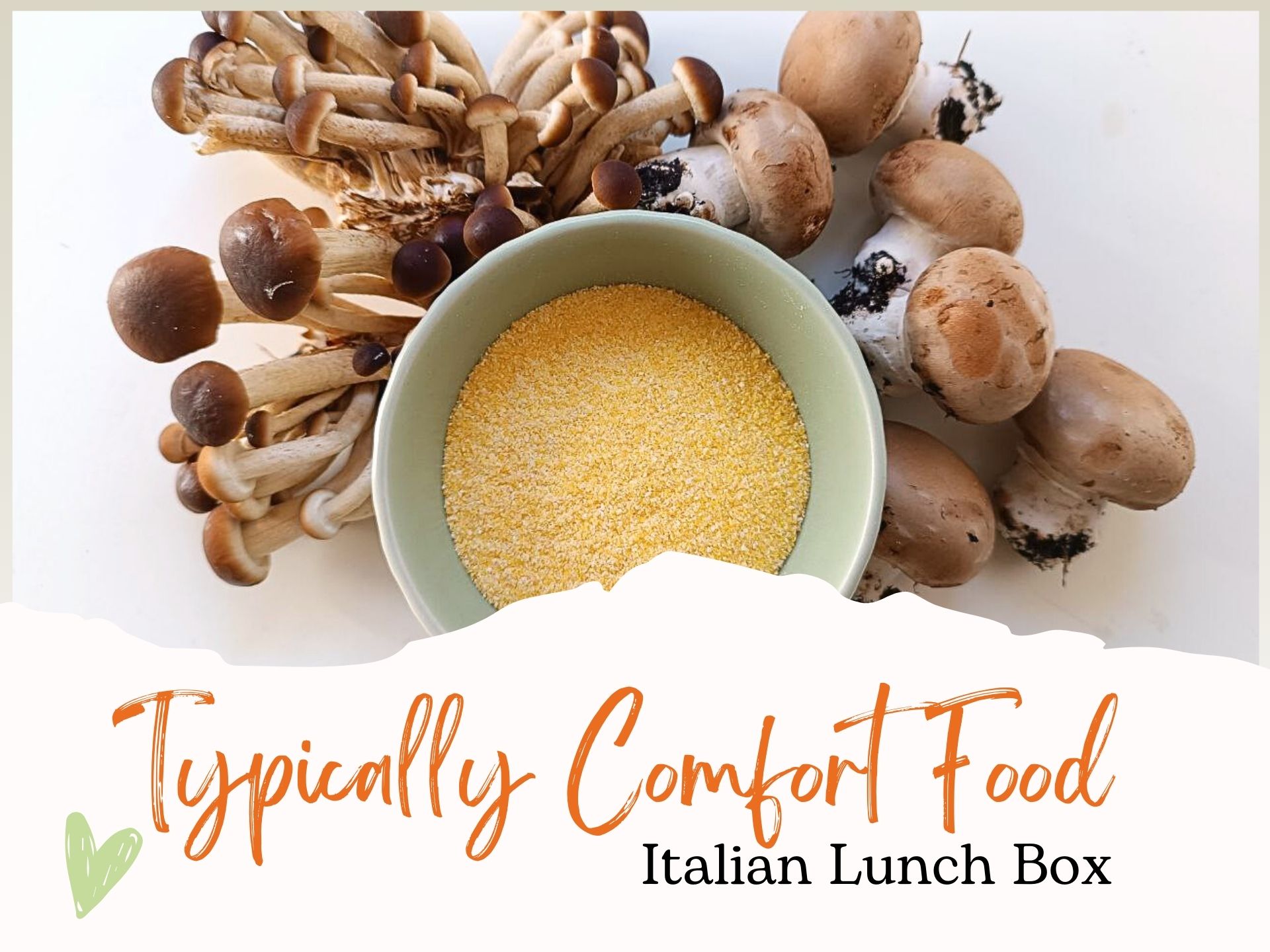
Time for some Polentine (Mini Cakes) with Sautéed Mushrooms to top these yummy kind of muffins.
You could also call them polenta bites, if you like! No matter what you call them, they’re a great way to start your aperitivo! Anytime, anywhere. These morsels are simply irresistible! 😍
Welcome to our plant-based recipes collection – the fruit (and veggies) of the collaboration between ottimoblog.com and appetibilis.net | Here happily edited and translated by Orsola 😀
What’s polenta? Polenta is the Italian seasonal comfort food par excellence, and it is really simple to prepare. It consists of yellow corn flour cooked in salted water. What may seem arduous is the cooking time.
If you start from scratch (with the coarse, stone-ground yellow corn) it can take up to 40-45 minutes of careful stirring. However, there are some convenient parboiled types (also instant), which take 5 to 10 minutes max to be ready.
Until corn reached the Italian peninsula from the New World, polenta was referring to any overcooked cereal (to the point of looking like a mash), or chestnut flour (the preferred one), flavoured with spices and cheese.
Traditional Italian Types of Polenta
Here are the traditional Italian types of polenta ranging from yellow (Y) to white corn flour:
- ‘Bramata’ [bra-mà-ta] – (Y) corn, coarse ground;
- The term ‘bramata’ comes from the husking (sbramatura), the operation by which the outer husk of the corn is removed, before milling.
- The classic polenta ‘Gialla’ [jàl-la, (gi sounds as in “jasmine”)] – (Y) medium-grain, and
- ‘Fioretto’ [fio-rét-to] – a (Y) fine-grained polenta, perfect also for gluten-free breading.
- This type of polenta gets its name from the type of flour used to make it: the yellow corn flour “fioretto”.
- Then there is polenta ‘Taragna’, [ta-rà-nya, as in “lasagna”], made by adding buckwheat flour (to the yellow one), it will have a darker colour and a more robust flavour.
- “Taragna” comes from a northern dialect term (Lombardy region) ‘tarél’, referring to the wooden stick used to stir the polenta in a pot over open fire.
- And polenta ‘Bianca’ [biàn-ca] made with white corn, with a subtler flavour.
Recipe for Polentine (mini cakes) with braised mushrooms
For this Polentine (Mini Cakes) with Sautéed Mushrooms recipe, Simona used an instant polenta, let it cool (to set) in a muffins mould to get some cute small portions that are easy to eat with a fork, even while standing.
The mushrooms are cremini and pioppini, easy to find, beautiful to look at and delicious. Use porcini mushrooms if you have them! They are ‘damn good’ – as we say in Rome 😉 – but she didn’t find them… Ready, steady, cook!

[servings: 4 | total time: 55 min | difficulty: medium-easy]
| Please note that the info and directions provided for the recipe are indicative: the end result may vary from person to person |
Ingredients
- 125 g instant polenta gialla
- 500 g water
- ½ teaspoon salt (for polenta)
- 6 cream champignon mushrooms
- 1 handful of pioppini mushrooms (*)
- 2 cloves of garlic
- 6 tablespoons oil (**)
- salt and pepper to taste
- 1 tablespoon chopped parsley
- 1 lemon grated zest
(*) The handful of pioppini mushrooms have been measured “a sentimento” (by feel). Most of the best Italian cooking isn’t an exact science 😉 (Please check the cover pic to get an idea).
About the oil (**) – Unless otherwise specified, we use organic and cold-pressed evo oil, or sunflower seed oil (the high-oleic type for frying).
Tools
- a whisk
- a saucepan medium-size
- 1 silicone mold (9 servings)
- a cutting board
- 2 sharp knifes (a pairing knife is always useful)
- 1 non-stick frying pan
- a ladles
- serving dishes

Directions
- Time to cook polenta. Place the water and the ½ teaspoon of salt in the saucepan and bring to a boil (over high heat).
- As soon as it boils, reduce the heat (to a barely simmering water) and, gradually, whisk in the polenta flour.
- Stirring with a whisk is vital, (especially if you never done it); otherwise, you might end up with some lumpy blob.
- Cook for the time required, (just follow the instructions mentioned on the package), then pour it into the mold, making sure to level the surface well. Allow to cool (30 min at least). Meanwhile…
Let’s prep the mushrooms
- Slice the cremini and leave the pioppini mushrooms whole, (cutting off only the leathery base).
- Heat the oil in the frying pan along with the garlic cloves.
- When the pan is hot, briefly sauté the mushrooms over high heat (5 to 8 min), season them (a generous pinch of salt should do). This way they will release their water, which you’ll keep aside for “salsina”.
- (You could cook the mushrooms separately or together. It’s up to you).
Make the “salsina”
- Start by chopping the parsley. Then, in a bowl, measure two tablespoons of oil and add the mushrooms’ water. Season with salt and pepper, and a bit of the chopped parsley. Whisk well.
- It’s a sauce that doesn’t emulsify as much but it’s super tasty nevertheless.
Time to plate
- On a board (or a serving plate), turn the mold with polentine upside down. This is the time to decide on the presentation (a little food styling goes a long way).
- Heat the “salsina” Pour a teaspoon of the sauce over each polentina, top with the mushrooms and a bit of sauce again.
- Finish with chopped parsley and the lemon zest.
- Serve immediately. By the way, they’re also great at room temperature.

Notes and Variations
- A note on creaminess. As long as polenta is hot (and the ratio water : cornmeal is correct) it will be creamy, yet once cooled you’ll be able to slice it.
- Adding some fat (like plant-based butter) and a vigorous whisking will produce the most amazingly creamy results you could ever imagine!
The “salsina”
- We’ve made the condiment as simple as possible so that you can make the recipe even at the last moment. And, as Simona always says, ‘If you’re missing something (ingredients), let’s do without it!’
- In this case, we could suggest making a sauce with vegetable cream, whipping it with some of the cooked mushrooms. But do you always have vegetable cream on hand? That’s a good question!
- We do keep some as a contingency plan, just in case. But don’t worry, if not, no problem at all!
As the saying goes “Necessity is the mother of invention”
Umami notes
- If you like your mushrooms cooked to their caramelized perfection, just sauté them until all the water has evaporated. Their rich umami(ness) combined with the dense creaminess of the cooled polenta is simply decadent and difficult to resist: almost swoony-noughty… Oh yeah! 🤤
Interesting Links
- Apropos of Pioppino mushrooms, also known by their scientific name Agrocybe aegerita, are small to medium-sized fungi that grow in abundant clusters on decaying hardwood trees.
- About button mushrooms, the name is referring to the young, white version of Agaricus bisporus… Also called portobello and cremini, they’re all the same mushroom at different stages of growth.
- Qui la ricetta in italiano per le Polentine con champignon ‘crema’ e pioppini
More Easy Recipes


Cucina, corsi, oli essenziali.
Insegno a cucinare in modo sano, testo e invento ricette “plant based” anche in video.
Scrivo racconti di cucina e non solo.
Cuisine, cooking lessons, essential oils.
I teach healthy cooking, test and create “plant based” recipes, also on video.
I write about food, and other stories.